
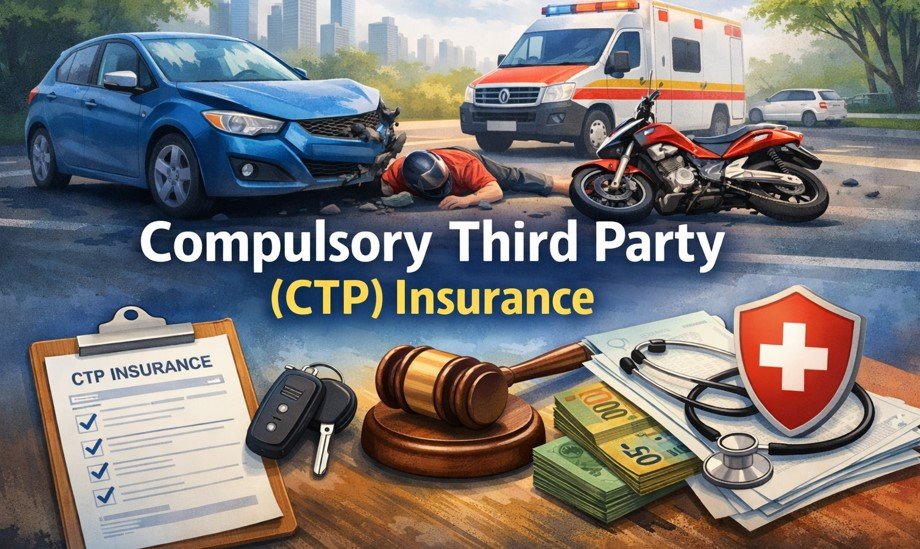
Compulsory Third Party (CTP) insurance is a non-negotiable requirement for every vehicle owner, serving as the foundational safety net for road users worldwide.
Whether you are a seasoned driver or a newcomer to the road, understanding Compulsory Third Party (CTP) insurance is essential because it bridges the gap between a split-second mistake and a lifetime of financial ruin.
Compulsory Third Party (CTP) insurance serves as a specialized form of protection that specifically covers the cost of personal injury or death resulting from a motor vehicle accident.
Unlike other forms of insurance that focus on the metal and glass of your car, Compulsory Third Party (CTP) insurance is entirely dedicated to the human element, protecting drivers, passengers, pedestrians, and cyclists from the exorbitant medical costs and legal liabilities that arise when someone is hurt.
What Exactly is Compulsory Third Party (CTP) Insurance?
Compulsory Third Party (CTP) insurance is the bedrock of modern road safety and legal compliance, acting as a mandatory financial shield for every vehicle owner.
Compulsory Third Party (CTP) insurance is unique because, unlike general property insurance, it is a social legal requirement designed to ensure that human life and physical well-being are prioritized over material assets.
To truly understand the mechanics of Compulsory Third Party (CTP) insurance, one must look past the paperwork and see it as a collective safety net that keeps the entire transport ecosystem functioning without the threat of catastrophic personal debt.
The Definition of a Statutory Requirement
Compulsory Third Party (CTP) insurance is defined by its status as a “statutory” requirement, meaning it is mandated by the government rather than being an optional purchase.
In almost every modern society, you cannot legally operate a motor vehicle on public roads without having a valid Compulsory Third Party (CTP) insurance policy or a government-equivalent “Green Slip.”
This mandate exists because the state has a vested interest in ensuring that victims of road accidents are not left to rely on public welfare systems or personal savings that may not exist.
By making Compulsory Third Party (CTP) insurance a prerequisite for vehicle registration, the law creates a pool of funds that can be drawn upon to provide immediate medical intervention and long-term support for those injured by the actions of a driver.
The Concept of Indefinite Liability Protection
One of the most powerful aspects of Compulsory Third Party (CTP) insurance is its ability to provide protection against indefinite and often astronomical liability. When a driver causes an accident that results in a permanent disability for another person, the legal damages can include decades of lost wages and 24-hour nursing care.
Compulsory Third Party (CTP) insurance serves as the buffer that prevents a single moment of negligence from resulting in the lifelong bankruptcy of the driver.
Without Compulsory Third Party (CTP) insurance, the legal system would be clogged with lawsuits against individuals who could never afford to pay the settlements, leaving victims with nothing and drivers with a debt they can never escape.
Understanding the Three-Party Relationship
To grasp how Compulsory Third Party (CTP) insurance functions, you must understand the specific legal relationship between the three parties involved in the contract. The “First Party” is the policyholder or the driver behind the wheel who pays the premium.
The “Second Party” is the insurance provider or the government body that manages the fund and processes the claims. The “Third Party”, which gives the insurance its name, is the victim of the accident.
Compulsory Third Party (CTP) insurance is specifically designed so that the Second Party pays the Third Party on behalf of the First Party.
This triangular relationship ensures that even if the First Party has no liquid assets, the Third Party is still guaranteed a high standard of medical care and financial restitution.
The Human-Centric Focus of Coverage
Unlike Comprehensive or Third Party Property insurance, Compulsory Third Party (CTP) insurance has a strictly human-centric focus, meaning it ignores the “metal and rubber” to focus on “blood and bone.”
While you might be worried about a dented bumper or a shattered windshield, Compulsory Third Party (CTP) insurance is only concerned with the person who was sitting behind that windshield or the pedestrian crossing the street.
It covers the complex costs of human recovery, including emergency surgery, intensive care, physiotherapy, and even psychological rehabilitation for post-traumatic stress.
This specific focus makes Compulsory Third Party (CTP) insurance an ethical necessity, as it treats the preservation of human life and function as the highest priority in the aftermath of a collision.
The Role of Universal Access to Compensation
Compulsory Third Party (CTP) insurance creates a system of universal access to compensation that stabilizes the economic impact of road trauma.
In many regions, the scheme is designed so that even if the injured party is a foreign tourist or an unemployed individual, they still receive the same level of high-quality medical treatment as a high-income earner.
This universality is the core “social” aspect of Compulsory Third Party (CTP) insurance. It ensures that the quality of a person’s healthcare after an accident is not dictated by their personal bank balance, but rather by the severity of their injuries and the coverage provided by the at-fault vehicle’s insurance policy.
The Distinction Between Fault and No-Fault Schemes
Depending on where you live, Compulsory Third Party (CTP) insurance may operate under a “Fault-Based” or a “No-Fault” legislative framework. In a fault-based system, the injured person must prove that the driver was negligent to receive full compensation.
In a no-fault system, Compulsory Third Party (CTP) insurance provides basic medical and income benefits to anyone injured, regardless of who caused the crash.
Understanding which system governs your Compulsory Third Party (CTP) insurance is vital because it determines how quickly benefits are paid out and whether you, as the driver, might receive any support if you are injured in an accident that was your own fault.
Why You Can’t Ignore Compulsory Third Party (CTP) Insurance
Compulsory Third Party (CTP) insurance is the only thing standing between a momentary lapse in judgment and a lifetime of financial and legal consequences.
While many drivers view Compulsory Third Party (CTP) insurance as just another line item on a registration bill, ignoring its importance can lead to catastrophic outcomes that extend far beyond a simple fine.
Below is an expanded look at why this specific type of coverage is the most critical component of your vehicle’s paperwork.
The Shield Against Infinite Financial Liability
The most terrifying reason you cannot ignore Compulsory Third Party (CTP) insurance is the sheer scale of potential debt following a serious accident.
In a world without Compulsory Third Party (CTP) insurance, a driver who causes an accident resulting in a victim’s permanent disability would be personally responsible for millions of dollars in medical bills, specialized equipment, and lost lifetime earnings. These costs are often “infinite” in a practical sense, as they can continue for fifty or sixty years.
Compulsory Third Party (CTP) insurance steps in to shoulder this massive financial burden, ensuring that a single car accident doesn’t result in the total seizure of your house, savings, and future wages to pay for a victim’s care.
Avoiding Severe Legal and Criminal Penalties
Because Compulsory Third Party (CTP) insurance is a statutory requirement, driving without it is a serious breach of the law that carries heavy weight in the judicial system.
In most jurisdictions, your vehicle registration is automatically voided if your Compulsory Third Party (CTP) insurance expires, meaning you are effectively driving an unregistered vehicle. This often results in immediate license suspension, hefty court-mandated fines that can reach thousands of dollars, and the potential for your vehicle to be impounded on the spot.
By prioritizing your Compulsory Third Party (CTP) insurance, you are protecting your legal right to drive and avoiding a criminal record that could affect your future employment opportunities.
Ensuring Ethical Responsibility to the Community
Beyond the legalities, there is a profound moral argument for why you cannot ignore Compulsory Third Party (CTP) insurance. When you take a vehicle onto a public road, you are operating a heavy, high-speed machine that has the potential to cause immense harm to others.
Compulsory Third Party (CTP) insurance is your “social contract” with your fellow citizens. It guarantees that if you accidentally injure a pedestrian, a cyclist, or another driver, that person will not be left to suffer in poverty or without medical treatment because of your mistake.
Maintaining your Compulsory Third Party (CTP) insurance is an act of civic responsibility, ensuring that the community remains safe and supported in the face of unforeseen tragedies.
Protection from the “Nominal Defendant” Recourse
Many drivers mistakenly believe that if they are uninsured, the “system” will just take care of the victim and leave them alone. While it is true that many regions have a “Nominal Defendant” fund to help victims of uninsured drivers, this does not mean the at-fault driver gets off scot-free.
If you cause an accident while your Compulsory Third Party (CTP) insurance is lapsed, the government or the insurance regulatory body can, and often will, sue you personally to recover every dollar they paid out to the victim.
Ignoring your Compulsory Third Party (CTP) insurance doesn’t hide you from the cost; it simply delays the moment the debt collectors arrive at your door with a much larger bill.
Maintaining Access to Modern Rehabilitation Tech
The field of medical recovery is advancing rapidly, but high-tech rehabilitation, such as robotic exoskeletons for spinal injuries or advanced neuro-rehabilitation, is prohibitively expensive.
You cannot ignore Compulsory Third Party (CTP) insurance because it provides the victim (and sometimes you, depending on the local no-fault laws) access to the highest tier of medical technology that would otherwise be unaffordable.
By keeping your Compulsory Third Party (CTP) insurance active, you ensure that the “Third Party” has access to the best possible chance of recovery, which is the ultimate goal of any post-accident intervention.
What Does Compulsory Third Party (CTP) Insurance Actually Cover?
Compulsory Third Party (CTP) insurance is a specialized form of indemnity that provides a financial lifeline specifically for the human costs associated with road trauma.
While many people mistake Compulsory Third Party (CTP) insurance for a general vehicle policy, it actually functions as a focused personal injury protection scheme that triggers the moment an accident occurs.
Below, we break down the extensive categories of coverage that make Compulsory Third Party (CTP) insurance an indispensable part of your vehicle registration.
Comprehensive Medical and Hospital Expenses
Compulsory Third Party (CTP) insurance ensures that the immediate physiological needs of an accident victim are met without the delay of personal financial vetting.
From the second an emergency call is placed, the policy covers the substantial costs of ambulance transportation, emergency room stabilization, and inpatient hospital stays.
This includes high-stakes expenses such as life-saving surgeries, diagnostic imaging like CT scans and MRIs, and all necessary pharmaceuticals administered during acute care.
Because these costs can escalate into the tens of thousands within a single day, the medical coverage provided by Compulsory Third Party (CTP) insurance is the primary reason why road accident victims can receive world-class care regardless of their own insurance status or income level.
Long-Term Rehabilitation and Therapeutic Support
Compulsory Third Party (CTP) insurance extends far beyond the hospital doors, funding the grueling and often expensive journey toward physical and psychological recovery. Rehabilitation coverage includes ongoing sessions with physiotherapists, occupational therapists, and speech pathologists to help victims regain their motor skills and independence.
Furthermore, modern Compulsory Third Party (CTP) insurance schemes recognize that the scars of an accident are often invisible; therefore, it frequently covers psychiatric support and counseling for post-traumatic stress disorder (PTSD).
This longitudinal care is vital because it addresses the “slow recovery” phase that typically follows the initial trauma, ensuring that a victim has the professional guidance needed to return to their pre-accident quality of life.
Compensation for Loss of Income and Earning Capacity
One of the most significant financial protections offered by Compulsory Third Party (CTP) insurance is the replacement of lost wages for those who can no longer work due to their injuries.
This benefit is not just a temporary fix; it is designed to account for both “past economic loss” (wages lost between the accident and the settlement) and “future economic loss” (the reduction in what a person could have earned over their lifetime).
Whether a person is a full-time employee, a freelancer, or even a student with future career prospects, Compulsory Third Party (CTP) insurance evaluates the impact of the injury on their professional life.
By providing these payments, the insurance prevents a physical injury from spiraling into a total household financial collapse.
Non-Economic Loss (Pain and Suffering)
Compulsory Third Party (CTP) insurance acknowledges that the impact of a crash is measured in more than just bills and receipts; it also covers “non-economic loss,” commonly known as pain and suffering.
This category of compensation is intended to provide a financial acknowledgement of the diminished quality of life, physical agony, disfigurement, or the loss of the ability to enjoy hobbies and social activities.
While putting a price on a person’s daily comfort is inherently difficult, Compulsory Third Party (CTP) insurance utilizes standardized legal scales to ensure that victims who have suffered significant or permanent impairments receive a lump-sum payment.
This acknowledges that the trauma of an accident changes a person’s life in ways that a standard medical bill cannot fully capture.
Continuous Care for Catastrophic Injuries
In the most tragic circumstances involving permanent disabilities, such as paralysis, severe brain trauma, or loss of limbs, Compulsory Third Party (CTP) insurance provides for lifetime care and support.
This is often managed through specialized state schemes that fund 24-hour nursing care, home modifications like wheelchair ramps or automated lifts, and the purchase of specialized vehicles.
Because the cost of supporting a person with a catastrophic injury can exceed several million dollars over their lifetime, this aspect of Compulsory Third Party (CTP) insurance is perhaps its most critical social function.
It ensures that those with the most severe needs are never abandoned and can live with dignity and the best possible medical technology.
Funeral Expenses and Support for Dependents
In the event of a fatal accident, Compulsory Third Party (CTP) insurance provides essential financial support to the grieving family and dependents of the deceased.
This coverage typically includes the immediate costs of funeral services and burials, easing the sudden financial burden on the family during a time of immense emotional distress.
More importantly, Compulsory Third Party (CTP) insurance can provide compensation to dependents (such as children or a non-working spouse) who relied on the deceased person for financial support.
This “loss of dependency” claim ensures that the surviving family members are not left destitute, providing a layer of security that honors the responsibility of the at-fault driver to the victims’ loved ones.
The Claims Process: What Happens After an Accident?
The claims process for Compulsory Third Party (CTP) insurance is a structured legal and administrative journey designed to move a victim from the chaos of a collision to the stability of a managed recovery.
Because Compulsory Third Party (CTP) insurance involves legal liabilities and medical assessments, the steps are often rigorous and time-sensitive.
Navigating the Compulsory Third Party (CTP) insurance landscape requires a clear understanding of your obligations as either the driver or the injured party to ensure that the “safety net” functions as intended.
Immediate Prioritization of Medical Care and Safety
The very first step in any Compulsory Third Party (CTP) insurance event is the immediate preservation of life and the documentation of injuries.
Before any paperwork is filed, the priority must be seeking professional medical assessment, as the clinical records created in the minutes and hours following an accident serve as the primary evidence for a future Compulsory Third Party (CTP) insurance claim.
Even if injuries seem minor, such as slight neck pain or a headache, failing to see a doctor immediately can jeopardize a claim later, as insurers may argue the injury was not caused by the accident.
These initial medical reports establish the “causation” link that is fundamental to the Compulsory Third Party (CTP) insurance framework.
Formal Notification and Police Reporting Requirements
In almost every jurisdiction, a Compulsory Third Party (CTP) insurance claim cannot proceed effectively without a formal police report.
If an accident involves any level of personal injury, the law typically requires the drivers involved to report the incident to the police within a strict window, often 24 to 72 hours.
This report provides an objective, third-party account of the event, including weather conditions, road layouts, and witness statements.
For the purposes of Compulsory Third Party (CTP) insurance, this document acts as a foundational “proof of occurrence,” ensuring that the claim is anchored in a verified event rather than an unsubstantiated allegation.
The Exchange of Essential Vehicle and Insurance Data
To trigger a Compulsory Third Party (CTP) insurance claim, the injured party must identify the insurer of the at-fault vehicle, which requires a diligent exchange of information at the scene.
This includes the driver’s name, contact details, and most importantly, the vehicle’s registration (license plate) number.
Since Compulsory Third Party (CTP) insurance is inextricably linked to the vehicle’s registration in most regions, the plate number is the key that unlocks the insurance database to identify which company is liable for the costs.
Without this information, the claims process becomes significantly more complex, potentially involving “Nominal Defendant” funds designed for unidentified or hit-and-run vehicles.
Lodging the Personal Injury Claim Form
Once the initial trauma has subsided, the formal Compulsory Third Party (CTP) insurance claim begins with the submission of a detailed Personal Injury Claim Form to the relevant insurer.
This document is exhaustive, requiring the claimant to provide a narrative of the accident, a summary of their injuries, and details regarding their employment and income. In many Compulsory Third Party (CTP) insurance schemes, there are strict statutory time limits, often ranging from six months to a year, within which this form must be lodged.
If the claimant misses these deadlines without a “reasonable excuse,” they may be legally barred from seeking compensation, making timely submission a critical hurdle in the process.
The Insurer’s Liability Investigation and Determination
After receiving the claim, the Compulsory Third Party (CTP) insurance provider initiates an internal investigation to determine the degree of “fault” or “liability.”
The insurer reviews police reports, interviews witnesses, and may even hire accident reconstruction experts to determine if their policyholder was truly responsible for the injuries. In a fault-based Compulsory Third Party (CTP) insurance system, the insurer will issue a formal “Liability Decision” within a set timeframe (usually several months).
They may admit full liability, deny it entirely, or argue for “contributory negligence,” suggesting the injured person was partially at fault (for example, by not wearing a seatbelt), which would reduce the final payout.
Ongoing Medical Assessment and “Maximum Medical Improvement”
As the claim progresses, the Compulsory Third Party (CTP) insurance provider will require the claimant to undergo independent medical examinations (IMEs). These are assessments performed by doctors chosen by the insurer to verify the severity of the injuries and the necessity of ongoing treatments.
A critical milestone in the Compulsory Third Party (CTP) insurance process is reaching “Maximum Medical Improvement” (MMI). This is the point where a person’s condition has stabilized and is unlikely to change significantly with further treatment.
Only once MMI is reached can the insurer accurately calculate the “quantum” or the total value of the claim, as the long-term impact of the injury is finally clear.
Negotiation, Settlement, or Dispute Resolution
The final phase of the Compulsory Third Party (CTP) insurance claims process is the negotiation of a settlement. Most claims are settled “out of court” through a series of offers and counter-offers between the injured party (or their lawyer) and the insurance company.
This settlement is usually a “once-and-for-all” lump sum that covers all past and future expenses. If an agreement cannot be reached, the Compulsory Third Party (CTP) insurance dispute may move to a formal tribunal or a court of law, where a judge or adjudicator will make a final, binding decision on the compensation amount.
Once the settlement is signed, the claim is closed, and the insurer’s financial obligation to that specific incident is fulfilled.
Conclusion
At the end of the day, Compulsory Third Party (CTP) insurance is about more than just checking a box for your vehicle registration. it is a social contract that ensures our roads remain a place where a mistake doesn’t have to mean the end of a person’s livelihood. By staying informed about your Compulsory Third Party (CTP) insurance, you are not just following the law—you are acting as a responsible member of the community.